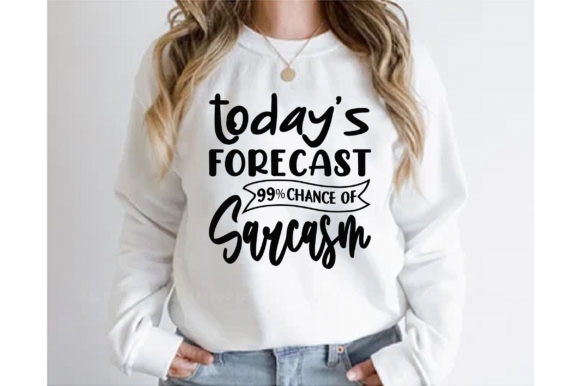
Today’s Forecast 99 Chance of Sarcasm Embroidery Review
As a designer who spends half her life staring at stitch charts and the other half arguing with thread tension, I don’t just look at an embroidery file; I look at how it will behave under the needle. When I first pulled up Today’s Forecast 99 Chance of Sarcasm, I didn’t just see a funny phrase. I saw a specific mood, a specific audience, and a specific set of technical challenges that come with turning typography into thread.
This isn’t just another generic graphic dropped into a design software. It is a piece of Print Templates and Graphics that promises to bring attitude to your next project. But does it hold up when you’re actually stitching it onto a customer’s hoodie or a personalized baby onesie? Let’s break down the practical reality of using this design in the real world.
The First Impression: Mood and Visual Personality
The moment you open the file, the personality hits you. The typography is bold, confident, and slightly irreverent. In the world of handmade products, personality is currency. People don’t buy embroidered items because they need a rectangle of fabric with letters on it; they buy them because they want to express something about themselves. This design taps directly into that desire for humor and relatability.
Visually, the layout feels balanced. It doesn’t scream for attention in a chaotic way; instead, it commands respect through clarity. For an embroidery project, this is crucial. Cluttered designs often turn into muddy blobs after stitching, but the spacing here suggests a clean finish. It feels like a design meant for someone who doesn’t take themselves too seriously but still appreciates quality craftsmanship. It fits perfectly into the niche of witty, modern home decor or casual streetwear.
Real-World Application: Where Does It Shine?
I’ve been thinking about where Today’s Forecast 99 Chance of Sarcasm would actually sell. It’s not a design for a formal wedding invitation, nor is it suitable for delicate lacework. Its strength lies in everyday comfort and statement pieces.
Imagine a custom embroidered tote bag made from heavy-duty canvas. The durability of the fabric matches the boldness of the text. Or picture a chunky knit sweatshirt where the design sits over the heart. The contrast between the soft, cozy texture of the garment and the sharp, sarcastic message creates a tactile experience that customers love. It works exceptionally well as a sweatshirt embroidery piece for those cold autumn days when a little cynicism is warranted.
It also has strong potential as a personalized gift. Think about a college student moving into their first apartment. A pillow cover featuring this design is the kind of item they post on social media, which drives organic marketing for your shop. It’s a holiday embroidery staple—perfect for Secret Santa exchanges where you want to make someone laugh without being offensive. The humor is universal enough to appeal to a wide range of buyers, from Etsy sellers looking for bestsellers to craft fair attendees browsing handmade goods.
Technical Considerations for the Embroidery Designer
However, let’s talk about the needle. Typography can be tricky. If the lettering is too thin or the corners are too sharp, you risk thread breaks or misalignment. While the provided digital embroidery file includes high-resolution vectors (EPS/SVG), the translation to stitch-out is where the magic happens.
If this design utilizes satin stitch for the outlines, ensure your machine is calibrated correctly. Satin stitches on curved letters can pucker if the density is too high. Conversely, if it uses fill stitch for the background elements, check the direction of the stitches to ensure they follow the natural flow of the letters. I always recommend converting the final design to black and white in your digitizing software to check for contrast issues before committing to expensive threads.
You must also consider the hoop size. If the design is large, you’ll need a bigger hoop, which limits your placement options on smaller garments like baby embroidery projects. If you’re aiming for a chest logo on a t-shirt, verify that the width fits comfortably within standard hoop dimensions. If the design extends beyond the hoop, you may need multi-hoop techniques, which adds time and complexity to your production process.
Where to Use It Carefully
Not every surface is created equal. Here are a few scenarios where you should proceed with caution:
- Small Hoop Sizes: If you attempt this on a tiny accessory like a keychain or a small patch, the details might get lost. Keep it on larger canvases.
- Textured Fabrics: Avoid bouclé wool or heavily textured knits. The needle might struggle to penetrate evenly, leading to inconsistent stitch formation.
- Stretchy Fabric: Without proper stabilization, stretchy materials like jersey can distort the lettering, making the sarcasm look slurred rather than snappy.
- Dense Stitch Areas: If the design has heavy fill areas, it might become stiff. This is fine for a wall hanging but less comfortable for a shirt worn against the skin.
Material and Thread Selection
The success of Today’s Forecast 99 Chance of Sarcasm hinges largely on your choice of thread colors. White thread on a black shirt is classic, but high-contrast combinations like neon yellow on navy or bright orange on charcoal can make the design pop even more. Since the source files include PNG and EPS formats, you have flexibility in previewing these color combinations digitally before you cut the stabilizer.
Don’t forget the stabilizer. For woven fabrics like cotton or linen, a tear-away stabilizer is usually sufficient. However, for knits or blends, a cut-away stabilizer provides better long-term stability, ensuring your finished product withstands multiple washes without the design shifting or puckering. This is especially important for commercial embroidery clients who expect durability.
Final Verdict: Is It Worth Adding to Your Library?
From a business perspective, designs like this have high perceived value. They are conversation starters. When a customer sees Today’s Forecast 99 Chance of Sarcasm stitched perfectly on a tote bag design or an apron, they aren’t just buying a product; they’re buying a joke they can wear or use daily. This emotional connection drives sales.
For the craft business owner, this design offers versatility. It can be adapted for custom apparel, embroidered patches for denim jackets, or even kitchen towel accents. The fact that it comes in multiple formats means you can use the vector files for print-on-demand mockups while using the embroidery file for physical production.
Before you mass-produce, however, do your due diligence. Test the design on scrap fabric. Check the stitch density. Confirm the licensing terms if you plan to sell the finished items commercially. Ensure that the design assets meet your quality standards. If the digitizing is clean, this design has the potential to be a standout item in your catalog.
In conclusion, Today’s Forecast 99 Chance of Sarcasm is more than just a funny phrase; it’s a versatile tool for any designer looking to add wit and warmth to their creations. It balances visual appeal with practical application, making it a smart addition to your library of graphics and print templates. Just remember: great embroidery isn’t just about the design—it’s about the execution. Stitch wisely, and let the sarcasm speak for itself.